Hacking Our Humanity: The Escalating Threat to Genomic Data Privacy in the Age of Cyberbiosecurity


In an increasingly digital world, where nearly every aspect of our lives is connected to the internet, the nature of identity theft and privacy risks has evolved dramatically. While financial data and personal credentials have long been prime targets, a new, far more intimate and permanent form of personal information is emerging as the ultimate prize for malicious actors: our genomic data. This "code of life," our very biological blueprint, is rapidly becoming a currency of innovation and power, holding the foundation of health and personalized medicine. However, as engineered biology integrates into cyberspace and the "Internet of Bodies" (IoB) expands, this sensitive information is simultaneously transforming into our biggest security risk.
The Unique Vulnerability of Your Digital DNA
Genomic data possesses intrinsic properties that make it uniquely challenging to protect, setting it apart from other data types. Unlike passwords or credit card numbers, your DNA is permanent and irreplaceable. Once compromised, it cannot be changed. Furthermore, each individual’s genome is unique (with the exception of identical twins), meaning a whole genome sequence can never be truly anonymized. Even small portions of a person's genome can be used to re-identify that individual, especially when combined with other datasets like genealogical data, surnames, or age. This inherent re-identifiability makes traditional de-identification methods, such as pseudonymization, insufficient for robust privacy protection.
A critical aspect of genomic data's uniqueness is its familial nature. When one individual shares their genetic information, they implicitly reveal information about their blood relatives—individuals who may not have consented to such disclosure. This "shared property" of DNA extends even to distant relatives, allowing re-identification based on shared blocks of DNA sequences, as seen in forensic genetic genealogy cases.
Anatomy of a Genomic Attack: Beyond Traditional Hacking
The threats to genomic data are multifaceted and increasingly sophisticated, ranging from purely digital compromises to novel "cyber-biological" attacks:
- Re-identification Attacks: Computational attacks can leverage information from shared genomic data and additional resources to link individuals to named identities. Methods like "trail attacks" and "dictionary attacks" exploit patterns and nonrandom encryption, proving that current privacy-enhancing technologies are not impregnable. Even summary statistics from genome-wide association studies (GWAS) are vulnerable to "membership inference attacks," revealing an individual's participation in potentially sensitive groups or their disease status.
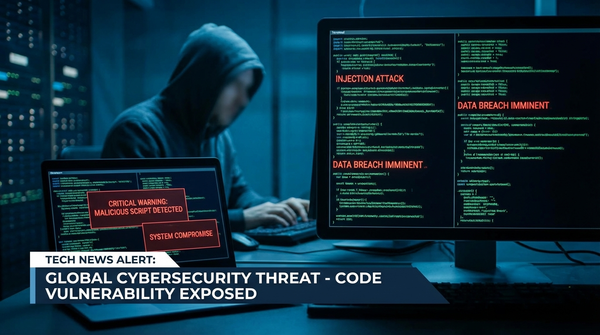
- Synthetic DNA-Encoded Malware (Bio-malware): Researchers have demonstrated the ability to encode malicious computer code directly into synthetic DNA strands. When this DNA is sequenced and processed by bioinformatics software, the code can compromise the computer analyzing the data, providing an attacker remote access or even allowing them to eavesdrop on or sabotage future DNA analyses. This represents a biological version of "injection attacks" and can be physically transported via common materials like lab coats or benches.
- AI-Driven Genome Manipulation and Misuse: The integration of Artificial Intelligence in biotechnology presents significant ethical challenges. Attackers could use AI-generated genome manipulation to create harmful biological agents. Worryingly, large language models (LLMs) have been used by students to design potential pandemic pathogens and by pharmaceutical companies to de novo design 40,000 potential biochemical weapons in under six hours. An LLM agent capable of performing a cyber-biological attack, such as obfuscating a sequence of concern in a DNA synthesis order, is a serious emerging threat.
- Poor Security Practices in Bioinformatics Software: Many commonly used, open-source bioinformatics programs, often developed by small research groups, exhibit poor computer security practices. Issues include a lack of basic security protocols like HTTPS encryption, leaving data transfers vulnerable. These software packages have not historically received significant adversarial pressure, making them susceptible to known vulnerabilities like buffer overflow attacks, which could allow unauthorized control of systems or manipulation of DNA results.
- Direct-to-Consumer (DTC) Genetic Testing Breaches: Companies like 23andMe have experienced significant data breaches, exposing the genetic and personal information of millions. These incidents often stem from "credential stuffing" attacks, where hackers use usernames and passwords leaked from other breaches. The interconnected features of these platforms, such as "DNA Relatives," can amplify the breach, exposing data about a user's relatives even if those relatives never directly used the service. These breaches highlight the fragility of user trust and the long-term, permanent consequences of genomic data exposure.
- The Internet of Bodies (IoB): This concept involves connecting human bodies to networks through ingested, implanted, or worn devices, enabling remote monitoring and control. IoB devices offer immense benefits but also present unprecedented security and privacy challenges. The potential exists for "bio-hackers" to launch cyberattacks against human bodies, leading to scenarios like "remote assassinations" via connected medical devices or the misuse of genomic data for surveillance, oppression, extortion, or even bioterrorism. Experts warn of a future where it may be "impossible to disconnect" from this all-knowing network, and bodies' anti-virus programs would need constant updates to prevent control by malicious actors.
The Evolving Landscape of Protection and the Road Ahead
Current privacy protection technologies and regulatory frameworks are often inadequate to address these unique challenges. Existing systems for genomic data privacy, even those employing third parties with restricted access, are susceptible to re-identification. Laws like HIPAA and GINA, while crucial, have gaps, particularly concerning data collected by direct-to-consumer genetic testing companies which often fall outside their purview. Many companies rely on self-regulation and lengthy privacy policies that consumers rarely read or fully understand, undermining the validity of consent.
A new, interdisciplinary field called cyberbiosecurity is emerging to address these vulnerabilities. It focuses on understanding and mitigating risks at the interfaces of life sciences, medical sciences, cyber systems, and cyber-physical systems. However, this field is severely underfunded and misunderstood, with many biotech professionals believing insufficient resources are dedicated to these risks.

Addressing these threats requires a multi-pronged approach:
- Enhanced Technical Safeguards: Implement robust cybersecurity protocols across the entire genomic data lifecycle, including encrypted cloud storage, secure sequencing protocols, AI-powered anomaly detection, rigorous access control, and real-time system monitoring. The development of adversary-resilient biological protocols is critically needed, as standard end-to-end encryption alone is insufficient when data can be corrupted or manipulated. Privacy-enhancing technologies (PETs) like homomorphic encryption, secure multi-party computation (SMC), differential privacy, and blockchain hold promise for secure data sharing and analysis, enabling computation on encrypted data without decryption or joint computation without revealing inputs.
- Improved Software Security Practices: The bioinformatics community must adopt standard software security best practices, including input sanitization, use of memory-safe languages, bounds checking, and regular security audits. Benchmarks and Security Technical Implementation Guides (STIGs) are needed for secure configuration of sequencers and data analysis pipelines.
- Stronger Authentication and User Education: For individuals, adopting strong, unique passwords and enabling multi-factor authentication (MFA) are critical defenses against credential stuffing attacks. Companies must prioritize user education on cybersecurity best practices and make terms of service more transparent and comprehensible.
- Proactive Regulatory and Policy Frameworks: Governments and policymakers must develop new legislation and regulatory guidelines specifically for genomic data and the Internet of Bodies, treating genetic data as a national security asset rather than just a privacy concern. This includes introducing crime risk assessments into the design and development of IoB technologies and ensuring accountability with real penalties for harm. Policies should also facilitate partnerships between DTC companies and healthcare providers to bring more genetic data under HIPAA’s protective umbrella.
- Interdisciplinary Collaboration and Research: Bridging the communication and expertise gaps between life scientists, computer security professionals, and social scientists is essential. There is a need for continued research into areas like secure integration of genomic data with Electronic Health Records (EHRs) while maintaining privacy, improving vulnerability scanning for software containers, and advanced cryptographic solutions for the confinement problem in genomic data. Developing benchmarks for LLM agents relevant to life sciences is also pivotal to preventing misuse.


In conclusion, the convergence of biology and cyberspace presents unprecedented opportunities and profound risks. Protecting our "digital DNA" is paramount for the future of personalized medicine, national security, and individual autonomy. As the Internet of Bodies becomes a reality, the urgency for robust cyberbiosecurity, formal anonymity protection schemas, and a united, proactive front from governments, academia, and industry is undeniable. The clock is ticking.