The $2 Billion CS2 Knife "Rug Pull": How Valve Crashed a Virtual Economy and Exposed the Dark Reality of Gaming Gambling

Understanding the Economics, Mechanics, and Exploitation Behind Counter-Strike's Loot Box Empire
Executive Summary
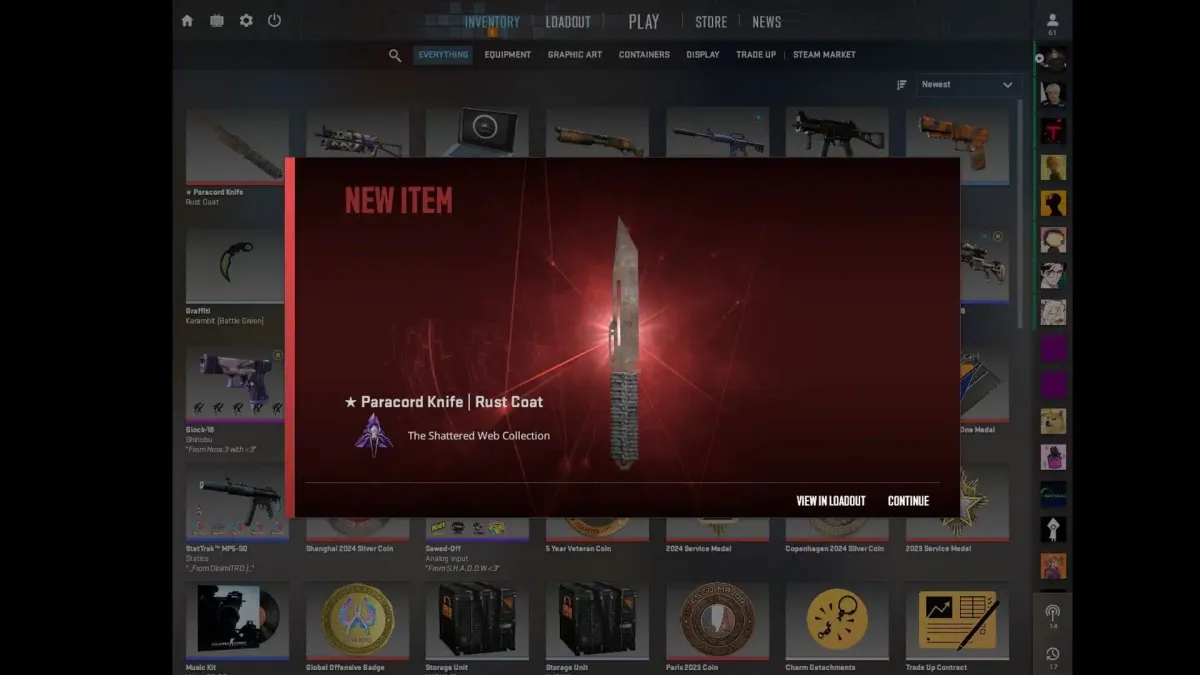
On October 23, 2025, Valve Corporation executed what many are calling a "$2 billion rug pull"—a single game update that wiped between $1.7 to $2 billion from the Counter-Strike 2 skin market in under 24 hours. While technically legal, this move exposed the fragile foundation of virtual gaming economies and revealed uncomfortable truths about how game developers profit from gambling mechanics disguised as "cosmetic systems."
 ScamWatchHQ
This deep dive explores:
- The technical mechanics of the update and why it crashed the market
- The mathematical probability systems behind CS2 case opening
- The streamer economy and how influencers profit from gambling content
- The legal gray areas that allow this ecosystem to exist
- The human cost of treating virtual items as investments
- Connections to exploit culture and game economy manipulation
1. The Trade-Up Update: What Actually Happened
The Mechanic Before October 23, 2025
Counter-Strike 2's Trade-Up Contract system allowed players to exchange 10 items of one rarity tier for a random item of the next higher tier. This worked for all tiers except the highest: you couldn't trade up to "Exceedingly Rare" items (knives and gloves).
The artificial scarcity this created:
- Knives could only be obtained from case drops (0.26% chance)
- Direct purchases on Steam Market (hundreds to thousands of dollars)
- This scarcity maintained knife values and created a $6 billion peak market
The Update That Changed Everything
Valve's October 23 update added one seemingly innocuous line to the patch notes:
"Extended functionality of the 'Trade Up Contract' to allow exchanging 5 items of Covert quality as follows:5 StatTrak™ Covert items → 1 StatTrak™ Knife5 regular Covert items → 1 Knife or Gloves"
What this meant in practice:
- Players could now convert just 5 Covert (red) skins into guaranteed knives
- Covert skins that sold for $3-$12 became knife-crafting materials
- The fundamental scarcity model collapsed instantly
The Market Reaction: A 24-Hour Bloodbath
Hour 1-6: Panic Selling
- Knife prices began dropping immediately
- Flip Knife: $600 → $275 (54% crash)
- Premium knives: 40-50% value loss across the board
- Steam Marketplace crashed from transaction volume
Hour 6-12: Covert Feeding Frenzy
- Glock-18 | Wasteland Rebel: $12 → $85 (608% surge)
- P250 | See Ya Later: $3.69 → $54.72 (1383% surge)
- Every cheap Covert skin became 1/5th of a knife
Hour 12-24: Reality Sets In
- Market cap dropped from $6B peak to $4.1B
- Individual traders lost thousands in minutes
- One documented case: $1,400 loss in 30 minutes on a single knife
- CSFloat and Pricempire tracking showed real-time devastation
The Numbers: Understanding the Supply Shock
According to CSFloat's analysis:
- ~20 million Covert skins existed (excluding knives/gloves)
- ~5.5 million knives/gloves in circulation pre-update
- Worst-case scenario: If all Coverts traded up → 11M knives (supply doubles)
- Realistic scenario: Partial trade-ups → 30-40% supply increase
The market reacted as if the worst case had already happened.
2. The Mathematical Reality of CS2 Case Odds
Valve's Official Disclosure (2017)
In 2017, forced by Chinese regulatory requirements, Valve published the official drop rates for CS2 (then CS:GO) cases. These numbers expose the brutal mathematics of virtual gambling:
Standard Weapon Case Odds:
| Rarity Tier | Drop Rate | Odds Ratio | Example |
|---|---|---|---|
| Mil-Spec (Blue) | 79.92% | 4/5 | ~80% chance |
| Restricted (Purple) | 15.98% | 4/25 | ~16% chance |
| Classified (Pink) | 3.20% | 4/125 | ~3.2% chance |
| Covert (Red) | 0.64% | 4/625 | 1 in 156 cases |
| Exceedingly Rare (Gold) | 0.26% | 1/385 | 1 in 385 cases |
StatTrak™ Multiplier: 10% chance on any drop (except Exceedingly Rare, which has separate pool)
The Math Behind "Expected Value"
Let's calculate the true cost of chasing a knife:
Assumptions:
- Case cost: $0.10 - $50 (varies by rarity, average ~$2)
- Key cost: $2.49 (fixed)
- Average cost per opening: $4.50
- Knife odds: 0.26% (1 in 385 cases)
To statistically expect ONE knife:
- Cases needed: 385
- Total investment: 385 × $4.50 = $1,732.50
- Average knife market value: $300-600 (post-update)
- Expected loss: $1,132.50 to $1,432.50
But it gets worse:
This is the average. RNG (Random Number Generation) means:
- You could open 1,000 cases with no knife (happens regularly)
- You could get lucky on case #5 (rare, but publicized heavily)
- The house edge is built into the mathematics
The Probability Misconception: Gambler's Fallacy
Many players believe "I've opened 300 cases, so I'm due for a knife soon!"
This is mathematically false.
Each case opening is an independent event. Your 301st case has the same 0.26% chance as your first. The probability doesn't "accumulate."
Simulation data from community experiments:
- Opening 1,000 cases typically yields 2-3 knives
- But distribution is random: some get 0, some get 5
- 30-40% of players opening 500 cases get ZERO knives
Souvenir Packages: Even Worse Odds
Souvenir packages contain 6 rarity tiers instead of 5. When we apply Valve's "5x rarer per tier" rule:
Souvenir AWP | Dragon Lore odds: 0.0256% or 1 in 3,906 cases
At $4.50 per case:
- Expected cost to unbox one: $17,577
- Current market value: ~$50,000+ (pre-crash)
- Sounds profitable? Factor in the 3,905 worthless drops you'll get first.
The Hidden Costs Most Players Ignore
- Transaction fees: Steam takes 15% on marketplace sales (5% Steam + 10% CS2)
- Float value variance: Same skin can be worth $10 or $1,000 based on wear
- Market volatility: Prices fluctuate daily based on trends
- Trade restrictions: 7-day hold on all items from cases
- Psychological cost: Addiction, chase losses, financial stress
Bottom line: The average ROI (Return on Investment) for CS2 case opening is -70% to -90%. This isn't gambling with a chance to win. It's mathematically guaranteed loss with occasional exceptions.
3. The Streamer Economy: Manufacturing Gambling Content
The $500,000 "World Record" Case Opening
On July 11, 2025, streamers TimTheTatman, Nadeshot, ohnePixel, and others opened approximately $500,000 worth of cases in a single stream, claiming it as a "world record" session.
What they opened:
- eSports 2014 Summer Cases
- DreamHack 2013 Souvenir Packages
- EMS Katowice 2014 Containers
- Cobblestone Souvenir Packages (some of the most expensive)
Notable "wins":
- Various Bayonets
- Vox Eminor (Holo) Katowice 2015 Stickers
- Team Dignitas (Holo) Katowice 2014 Sticker
The reality behind the hype:
"A LOT of cases were opened, expensive ones at that, with the vast majority yielding very little return on investment."
These streamers almost certainly operated at a massive loss—but that's not the point.
The Real Business Model: Views, Not Wins
How streamers profit from case openings:
- Sponsorships from case-opening sites
- Third-party gambling sites pay $50,000 - $500,000+ for promotion
- Sites like CSGORoll, CSGOEmpire, and others compete for influencer deals
- YouTube ad revenue
- Case opening videos regularly hit 500K - 5M views
- CPM (cost per thousand views) can be $3-10 for gambling content
- A single 2M view video = $6,000 - $20,000 in ad revenue
- Twitch subscriptions and donations
- Viewers "donate" hoping the streamer will open cases for them
- Hype creates engagement, engagement creates subs
- Top case-opening streamers: 10,000+ subs at $5-25 each
- Affiliate codes and commission
- Gambling sites give streamers unique codes
- Every signup using the code = commission (often 10-30% of losses)
- Creates perverse incentive: more viewer losses = more streamer profit
The watch time statistics:
According to Streams Charts analysis:
- 6.2% of CS:GO Twitch watch time in July 2023 was case-opening content
- This came from only 2.3K channels out of 133.1K streaming CS:GO
- 58.3M hours of gambling content watched in a single month
- Predominantly young, male audience (prime demographic for gambling addiction)
The Psychological Manipulation Tactics
1. "Near misses" and manufactured excitement
- Case opening animations show items "scrolling" past the selected item
- Players see knives roll by just before landing on a blue skin
- Creates illusion of "almost winning" - a known gambling manipulation tactic
2. Publicizing wins, hiding losses
- Streamers scream and react dramatically to knife drops
- Those videos get millions of views and shares
- The 400 failed cases before it? Never mentioned or downplayed
- Creates survivorship bias: viewers only see success stories
3. "Free" initial Covert skins
- Gambling sites give streamers pre-loaded accounts with high-value items
- Makes case opening look profitable and easy
- Regular users don't get these advantages
4. Minimizing the money spent
- "$500,000 case opening" sounds like an event, not gambling
- Framed as "content creation" rather than gambling promotion
- Avoids Twitch's gambling restrictions by using in-game cases
The s1mple Controversy: Community Hypocrisy Exposed
In July 2025, legendary CS player Oleksandr "s1mple" Kostyliev joked about becoming a casino streamer after his NAVI contract ends:
"Damn, I've never dipped into this swamp before. Maybe I should give it a shot? I could make some cash when my contract with NAVI ends."
The community reaction: Outrage. Condemnation. Moral grandstanding.
The hypocrisy: That same community celebrated TimTheTatman and Nadeshot's $300,000 case opening with zero criticism.
As analyst Loba pointed out:
"Same CS2 community hyped to watch 3 streamers unboxing $300,000 without the gamba category or any censorship. Oh yea and every CS2 major has been funded by gamba sponsors."
The double standard revealed:
- Casino streams = immoral
- Case opening streams = entertainment
- Both are mathematically equivalent gambling
- Both target young audiences
- Both profit from viewer losses
4. The Legal Gray Zone: Why This Is Allowed
The Virtual Currency Loophole
CS2 skins exist in a legal gray area because they're technically not "real money"—even though they're traded for real money constantly.
The legal argument:
- Players don't spend "money" on cases—they buy "entertainment"
- What drops from cases has no "guaranteed value"
- Skins aren't "official currency" (despite $6B market)
- Third-party trading happens "outside our control" (wink wink)
This legal fiction allows Valve to:
- Avoid gambling regulations in most jurisdictions
- Pay no gambling taxes
- Accept no responsibility for addiction
- Profit from 15% transaction fees with zero oversight
The 2016 TmarTn and ProSyndicate Scandal
The most infamous CS:GO gambling scandal exposed the ecosystem's vulnerabilities:
What happened:
- YouTubers TmarTn and ProSyndicate promoted CSGOLotto gambling site
- They won tens of thousands of dollars on stream
- Fans flocked to the site hoping for similar wins
- Plot twist: TmarTn and ProSyndicate secretly owned CSGOLotto
- They never disclosed their ownership
- Their accounts were likely rigged to show fake wins
The consequences:
- Website shut down after exposure
- FTC investigation launched
- Class-action lawsuits filed
- Both streamers' reputations permanently damaged
The problem that remains: This was just one site. The ecosystem that enabled it still thrives.
Countries Fighting Back: Austria Rules Loot Boxes Illegal
In December 2023, an Austrian court ruled that CS:GO cases constituted illegal gambling and ordered Valve to refund €14,096.58 ($15,426) to a player who spent the money opening cases.
The court's reasoning:
"Counter-Strike loot boxes depend on chance and represent an asset within the meaning of the Austrian Gambling Act because the 'skins' would be traded on a secondary market (e.g. 'Steam') and thereby make a profit. Therefore it is gambling. Since Valve does not have a gaming license, the contracts concluded between it and the plaintiff are void and the payments made are reclaimable."
Other countries taking action:
- Belgium: Loot boxes classified as gambling, restricted for citizens
- Netherlands: Loot boxes regulated under gambling laws
- Slovakia: Similar restrictions in place
- China: Required disclosure of odds (2017)
Valve's response: Minimal compliance in specific jurisdictions, business as usual everywhere else.
Twitch's Evolving Stance
2022: Twitch banned promotion of unlicensed gambling sites
June 2025: Twitch officially banned advertising of CS2 skin gambling and roulette sites
What's still allowed:
- Opening cases directly in CS2 (not considered "promotion")
- Streamers like xQc, Trainwreckstv, and OhnePixel continue opening thousands of cases
- No age restrictions on watching this content
The loophole: As long as streamers aren't "sponsored" by the case-opening sites, they can show gambling to millions of young viewers with no consequences.
The ItsSliker Saga: Scamming Viewers Twice
2022 scandal:
- Kick streamer ItsSliker borrowed money from other streamers and viewers
- Admitted to using it for casino gambling
- Claimed gambling addiction
February 2025 - New allegations:
- Accused of taking CS2 knives from viewers
- Promised payment or PUBG challenge prizes (£100 per winner)
- Never paid, allegedly used knives to fund more gambling
- 6+ months later, victims still waiting for payment
His defense: Called the knives "tips" and downplayed the amounts
This demonstrates how the unregulated skin economy enables repeat scammers with no real consequences.
5. Market Manipulation and Exploit Culture
The EG Stockholm Sticker Pump and Dump
In September 2021, the EG (Holo) Stockholm 2021 sticker demonstrated classic market manipulation:
The timeline:
- Normal price: ~$1
- September 2021: Artificial hype campaign begins
- Peak price: $349.40 (34,840% increase)
- Rapid crash back to baseline
The manipulation playbook:
- Coordinated buying by whale investors
- Social media hype and FOMO (Fear of Missing Out)
- Influencers promoting "investment opportunity"
- Retail investors buy in at peak
- Whales dump holdings
- Retail investors left holding worthless stickers
This exact pattern repeats regularly in the CS2 economy.
Information Asymmetry: The Insider Advantage
Who knows about updates before the public?
- Valve employees (obviously)
- Professional traders with industry connections
- Betting site operators with Valve relationships
- Top streamers who receive early briefings
The October 23 knife update: According to reports, nobody outside Valve knew about the Trade-Up change beforehand. This means:
- No insider trading happened (allegedly)
- But it demonstrates Valve's absolute power
- They can change rules with zero notice
- No appeals process, no community input
For comparison: In real financial markets, this would trigger:
- SEC investigations
- Market manipulation charges
- Insider trading prosecutions
- Class-action lawsuits
- Regulatory reforms
In CS2? Nothing. It's "just a game."
Bot Networks and Automated Trading
The CS2 skin market is rife with automated trading systems:
How trading bots work:
- Monitor Steam Market 24/7 for pricing anomalies
- Instantly buy underpriced items
- Relist at market rate for instant profit
- Process thousands of transactions per hour
The advantage:
- React faster than human traders
- No emotional decision-making
- Can arbitrage across multiple platforms simultaneously
- Exploit Steam API limitations
Who runs these bots:
- Professional trading operations
- Organized crime groups (yes, really)
- Tech-savvy individuals with programming skills
- Third-party gambling sites manipulating supply
For hackernoob.tips readers: This connects directly to game exploit culture. The same skills used to find game exploits (API reverse engineering, packet analysis, automation) apply to market manipulation.
The Float Value Exploitation
What is float value? Every CS2 skin has a hidden "float" value between 0.00 and 1.00 that determines wear:
- 0.00 - 0.07: Factory New
- 0.07 - 0.15: Minimal Wear
- 0.15 - 0.38: Field-Tested
- 0.38 - 0.45: Well-Worn
- 0.45 - 1.00: Battle-Scarred
The exploitation:
- Two "Factory New" skins can have vastly different floats (0.01 vs 0.06)
- Lower float = more valuable (often 2-10x price difference)
- Trading bots auto-scan for low-float deals
- Regular players get scammed trading 0.06 for 0.01 assuming equal value
Advanced exploitation - "Blue Gems": Certain patterns (Case Hardened skins) with specific float values show more blue coloring:
- Regular Case Hardened AK: $50-100
- "Blue Gem" pattern: $10,000 - $100,000+
- Requires database knowledge and pattern IDs
- Creates insider market for "pattern traders"
6. The Human Cost: Real Money, Real Consequences
The Immediate Victims: Traders and Collectors
CS streamer FURIOUSSS's warning (October 23, 2025):
"You guys know that people are probably going to harm themselves cause of this, yet you pushed it out without hesitation, crazy."
This wasn't hyperbole. Real people lost real money:
Documented losses:
- One trader: $1,400 loss in 30 minutes
- Portfolio traders: $10,000 - $100,000+ losses common
- Professional inventory holders: Hundreds of thousands evaporated
- Total market: $2 billion destroyed
The psychology: Many treated CS2 skins as legitimate investments:
- Diversified "portfolios" of knives and rare skins
- Expected appreciation over time
- Some used borrowed money or credit
- Others invested college tuition or rent money
Top skin trader zipeL's response:
"I am very invested in skins, obviously it is not looking great but nonetheless I feel pretty calm- will sit back and see how things unfold. However, I know many people will/are not coping well – please look out for each other – things will be alright."
The Addiction Pipeline: From Kid to Problem Gambler
How it starts:
- Kid watches favorite streamer open cases
- Gets excited about possibility of knife
- Asks parents for Steam money "to buy a game"
- Opens first case, gets blue skin (79.92% chance)
- "Just one more try..."
The progression:
- Week 1: $20 spent, no knife
- Month 1: $100 spent, got one purple skin
- Month 3: $500 spent, chasing that knife
- Month 6: $2,000+ spent, still no knife
- Year 1: Either quit broke or now addicted
Studies show:
- Esports bettors are predominantly younger males
- Skin gambling serves as gateway to broader gambling
- Strong correlations between skin gambling and problem gambling among adolescents
- Average age of first skin gambling: 13-15 years old
One player's testimony from Reddit:
"It is gambling and the house always wins. I've spent about £4.5k in cases and keys, most expensive item I've pulled was £100."
Another:
"Statistically you'll unbox a knife every 400 cases if you open an infinite amount of them."
The Regulatory Void: No Protection for Victims
When you lose money gambling at a licensed casino:
- Legal recourse exists for disputes
- Regulatory bodies oversee operations
- Self-exclusion programs available
- Mandatory responsible gambling resources
- Treatment programs funded by gaming taxes
When you lose money on CS2 cases:
- Zero regulatory oversight
- Zero consumer protection
- No refunds, ever
- No self-exclusion tools
- No addiction resources from Valve
- No taxes to fund treatment programs
You're completely on your own.
Community Response: The Reddit Thread
The LivestreamFail subreddit exploded with reactions to the update:
"My knife just dropped $1,400 in value in the span of 30 minutes – what the fuck."
"I just sold a skin I bought for like three dollars months ago for 35 lmao. I liked the skin, but it would be stupid to miss out on a 10x profit."
"Unpopular opinion, but thank god the CS market crashed. Mental the price of some of these things and there has been so much market manipulation recently. Counter Strike needed a bit of a reset or pull back."
The divide is clear:
- Investors/traders: Devastated, calling it a scam
- Regular players: Celebrating accessibility to knives they could never afford
- The industry: Silence from Valve, profit from chaos
7. Technical Deep Dive: How RNG Systems Work
The Random Number Generation Algorithm
CS2 uses provably fair RNG (Random Number Generation) based on cryptographic principles:
The basic structure:
# Simplified representation
def open_case(case_id, user_seed):
    # Server seed (hidden from player)
    server_seed = get_server_seed()

    # Combine seeds for deterministic randomness
    combined_seed = hash(server_seed + user_seed + case_id)

    # Generate random float between 0.0 and 1.0
    random_float = generate_random(combined_seed)

    # Map to rarity tiers
    if random_float < 0.0026:
        return "Exceedingly Rare"  # 0.26%
    elif random_float < 0.0090:
        return "Covert"  # 0.64%
    elif random_float < 0.0410:
        return "Classified"  # 3.20%
    elif random_float < 0.2008:
        return "Restricted"  # 15.98%
    else:
        return "Mil-Spec"  # 79.92%
Why this matters:
- Each roll is truly independent
- Previous results don't affect future results
- No "due for a win" mechanic exists
- The algorithm is mathematically fair but economically unfair
Server-Side vs Client-Side
Critical detail: The case opening animation you see is cosmetic only.
What actually happens:
- Player clicks "Open Case"
- Server instantly determines outcome using RNG
- Client receives result
- Animation plays to create suspense
- Item is revealed (but was determined in step 2)
Why the animation is manipulative:
- Shows items "almost" won (near-misses)
- Creates illusion of "close calls"
- Increases gambling urge through fake suspense
- Psychologically reinforces "try again" impulse
For exploit hunters: You CANNOT:
- Manipulate the client animation to change outcomes
- "Time" your click to land on specific items
- Predict outcomes through packet sniffing
- Use any client-side exploit to influence results
The outcome is determined server-side before the animation begins.
The StatTrak™ Roll: Two-Stage Process
Stage 1: Determine rarity tier (using percentages above)
Stage 2: If eligible tier (Mil-Spec through Covert), roll for StatTrak™:
if rarity in ["Mil-Spec", "Restricted", "Classified", "Covert"]:
    stattrack_roll = random()
    if stattrack_roll < 0.10:  # 10% chance
        apply_stattrack = True
Key insight: StatTrak™ doesn't make knives more rare. It's a separate 10% roll after you get the knife, pulling from a StatTrak™-specific knife pool.
Float Value Generation
How float is determined:
# Each skin has a float range defined
skin_float_range = {
    "min": 0.00,  # Minimum wear
    "max": 1.00   # Maximum wear
}

# Generate random float within skin's range
item_float = random_float(skin_float_range["min"],
                          skin_float_range["max"])

# Determine wear condition
if item_float < 0.07:
    wear = "Factory New"
elif item_float < 0.15:
    wear = "Minimal Wear"
# ... etc
Why this creates value variance: Two "Factory New" items might be:
- 0.0001 float (near perfect, extremely valuable)
- 0.0699 float (barely FN, much less valuable)
Both labeled "Factory New" but 10-100x price difference for collectors.
API Endpoints and Trading Bot Mechanics
Steam API endpoints exploited by trading bots:
# Get inventory
GET /inventory/{steamid}/{appid}/{contextid}

# Get market listings
GET /market/listings/{appid}/{market_hash_name}

# Get price history
GET /market/pricehistory/?appid={appid}&market_hash_name={name}
Bot strategy:
- Poll these endpoints every 1-5 seconds
- Parse JSON for pricing anomalies
- Execute trades via Steam's undocumented trading API
- List items back on market before prices correct
Rate limiting: Steam implements rate limits, but:
- Multiple accounts bypass per-account limits
- Proxies/VPNs bypass IP limits
- Professional operations run 50-200 accounts simultaneously
For hackernoob.tips readers: This is essentially a legal exploit of Steam's API design. The same reverse-engineering skills used for game hacking apply here:
- API endpoint discovery
- Authentication bypass (using multiple accounts)
- Automation (Python + Selenium/requests)
- Packet analysis to find undocumented features
8. Connections to Broader Gaming Exploits
The Intersection of Exploit Culture and Market Manipulation
For readers familiar with game hacking, CS2's economy presents fascinating parallels:
Traditional Game Exploits:
- Wallhacks (seeing through walls)
- Aimbots (auto-targeting)
- ESP (Extra Sensory Perception - player info overlays)
- Kernel-level detection bypass
Market Exploits:
- Information asymmetry (insider knowledge)
- Automated trading (reaction time advantage)
- Float value databases (hidden information leverage)
- Pattern ID catalogs (specialized knowledge)
Both require:
- Technical knowledge
- Reverse engineering skills
- Understanding of game architecture
- Exploiting information gaps
The VAC System vs Market Protections
VAC (Valve Anti-Cheat):
- Sophisticated kernel-level detection
- Pattern matching for known cheats
- Behavioral analysis for suspicious play
- Regular ban waves
- Hardware ID bans
Market protections:
- Basically none
- 7-day trade hold (easily bypassed with multiple accounts)
- No detection of bot networks
- No limits on API polling
- No restrictions on automated trading
The irony: Valve invests millions in anti-cheat technology but ignores market manipulation that generates billions in transaction fees.
The CS2 Source Code and Exploit History
CS2 is built on Source 2 engine. Exploit researchers have documented:
Known vulnerabilities:
- Client-server desync exploits
- Animation-based hitbox manipulation
- Movement exploits (bunny hopping, strafe jumping)
- Grenade trajectory exploits
Market-related exploits:
- Steam API abuse for inventory scraping
- Trading bot networks
- Phishing schemes targeting high-value inventories
- Account hijacking for item theft
Notable incidents:
- Steam trade hold implemented after wave of API-based phishing
- Two-factor authentication required after inventory theft epidemic
- Email verification for market listings after bot farming
Related Articles on HackerNoob.tips
Kernel-Level Anti-Cheat & Game Security:
- Advanced Anti-Cheat System Analysis: Technical Deep Dive and Security Implications - Deep dive into Vanguard, BattlEye, EAC kernel-level detection methods, DMA exploits, and firmware countermeasures
- AI Game Cheating and Windows API Cheating: The Role of AI Tools - How AI assists in exploit development, memory scanning patterns, and API manipulation
Network Protocol Analysis & Reverse Engineering:
- Advanced Network Protocol Analysis: From Capture to Exploitation - Reverse engineering proprietary protocols, packet analysis with Wireshark, and traffic manipulation techniques
Threat Intelligence & OSINT:
- Advanced OSINT Techniques: From Basic Tools to Professional Intelligence Gathering - AI-driven automation, real-time analysis, and multimodal data integration for threat research
- The "s1ngularity" Supply Chain Attack: First Known Case of Weaponized AI Tools in Malware - How attackers weaponize developer tools and CI/CD systems
Operational Security:
- Ultimate Guide to Digital Hygiene & Operational Security (OPSEC) - Advanced privacy techniques and security against sophisticated adversaries
<a name="future-implications"></a>
9. What This Means For The Future
Will Valve Reverse the Update?
Short answer: Almost certainly not.
Reasoning:
- Precedent: Valve rarely reverses major changes
- Revenue: Increased trading volume = more transaction fees
- Legal risk: Reversal might admit the original system was manipulative
- Player base: Many players celebrating the change (cheaper knives)
What Valve might do:
- Add new "Ultra Rare" tier above knives
- Introduce additional scarcity mechanics
- Create new exclusive items to replace knife prestige
- Adjust odds for future cases
Market Predictions: Where Do Prices Go?
Analyst projections:
SAC (Irish Guys esports):
- Knife/glove prices stabilize 5-10% lower than pre-update
- Covert skin prices remain elevated short-term
- New equilibrium reached within 2-3 months
CSFloat analysis:
- Worst case: Knife supply doubles (from 5.5M to 11M)
- Realistic case: 30-40% supply increase
- Long-term: Knives still among rarest items
Market psychological factors:
- Trust in Valve as "custodian" of virtual economy: Shattered
- Investor confidence in skin appreciation: Destroyed
- Speculation that Valve will do this again: High
Likely outcome:
- Prices stabilize 20-30% below pre-update peaks
- Market remains permanently depressed due to trust loss
- Trading volume decreases as speculators exit
- Casual players benefit from affordable knives
Regulatory Pressure: The Coming Crackdown?
Countries likely to ban/restrict loot boxes next:
- United Kingdom (active investigation)
- Australia (political pressure mounting)
- United States (state-level actions expected)
- Germany (discussions ongoing)
Industry response options:
Option 1: Self-regulation
- Implement mandatory odds disclosure globally
- Add spending limits and self-exclusion tools
- Fund addiction treatment programs
- Age-verify all players
Option 2: Fight regulations
- Lobby governments (already happening)
- Argue "not gambling" legal position
- Minimal compliance in restricted markets
- Business as usual elsewhere
Prediction: Valve will choose Option 2 until forced otherwise.
The Bigger Picture: Virtual Economies as Unregulated Markets
What CS2's knife crash proves:
- Virtual economies are real economies
- Developers have absolute power over these markets
- Players have zero protection or recourse
- Gambling mechanics target vulnerable populations
- Self-regulation is a myth
This extends beyond CS2:
- Diablo Immortal's monetization
- FIFA Ultimate Team loot boxes
- Genshin Impact's gacha system
- NFT gaming projects
- All mobile game loot mechanics
The pattern:
- Create artificial scarcity
- Attach real money to virtual items
- Implement gambling mechanics
- Profit from compulsive spending
- Accept zero responsibility for consequences
What Can Be Done? Recommendations
For Players:
- Never treat virtual items as investments
- Set hard spending limits and stick to them
- Recognize case opening as gambling, not gaming
- Buy specific skins directly instead of opening cases
- Support regulatory efforts in your country
For Parents:
- Monitor children's Steam spending
- Educate about gambling mechanics in games
- Block access to gambling-related content
- Watch for warning signs of addiction
For Regulators:
- Classify loot boxes as gambling (they are)
- Require licenses for games with loot boxes
- Mandate odds disclosure and spending limits
- Ban marketing gambling mechanics to minors
- Tax virtual economies like real casinos
For The Industry:
- Implement ethical monetization
- Provide direct purchase options
- Fund independent research on addiction
- Support players with gambling problems
- Transparent disclosure of all mechanics
Prediction: None of this will happen voluntarily. Only legal force will change this system.
Conclusion: The House Always Wins (And Changes The Rules)
The CS2 knife market crash of October 2025 was a $2 billion lesson in a fundamental truth: when you play in someone else's economy, you're not an investor—you're the product.
Valve demonstrated with a single update that:
- Virtual "property" isn't property at all
- The rules can change without notice
- No regulatory body will protect you
- Profit motive trumps player welfare
- The house always wins
For technical readers: The same skills that enable game hacking—reverse engineering, API exploitation, automation—are the tools used by professional market manipulators to extract wealth from casual traders.
For gamers: Every case you open is a -70% to -90% expected value proposition. The math doesn't lie. The house edge is built into the code.
For everyone: This isn't just about CS2. It's about the broader reality of virtual economies, loot box mechanics, and gambling systems hidden behind "cosmetic" labels. Until governments classify these systems as the gambling they obviously are, millions will continue to lose money to mathematically rigged systems marketed to children.
The only way to win is not to play.
Additional Resources & References
Mathematical Analysis:
- Valve's Official Case Odds Disclosure (2017)
- Community ROI Studies (Reddit r/GlobalOffensive)
- CSFloat Market Analysis Tools
- Pricempire Historical Price Data
Addiction Resources:
- National Council on Problem Gambling: 1-800-522-4700
- Gamblers Anonymous: www.gamblersanonymous.org
- Game Quitters: www.gamequitters.com
Legal Developments:
- Austrian Court Ruling (December 2023)
- Belgian Gaming Commission Reports
- UK Gambling Commission Loot Box Review
Technical Documentation:
- Steam Web API Documentation
- Source 2 Engine Specifications
- CS2 Networking Protocol Analysis
About HackerNoob.tips We provide in-depth technical analysis of game systems, exploits, and security mechanisms. Our mission is to educate through transparency, not to encourage unethical behavior. Understanding how systems work—including their flaws—is the first step toward building better, more secure, and more ethical alternatives.
Disclosure: This article is for educational and analytical purposes. We do not endorse gambling, case opening, or market manipulation. Always gamble responsibly or, better yet, don't gamble at all.